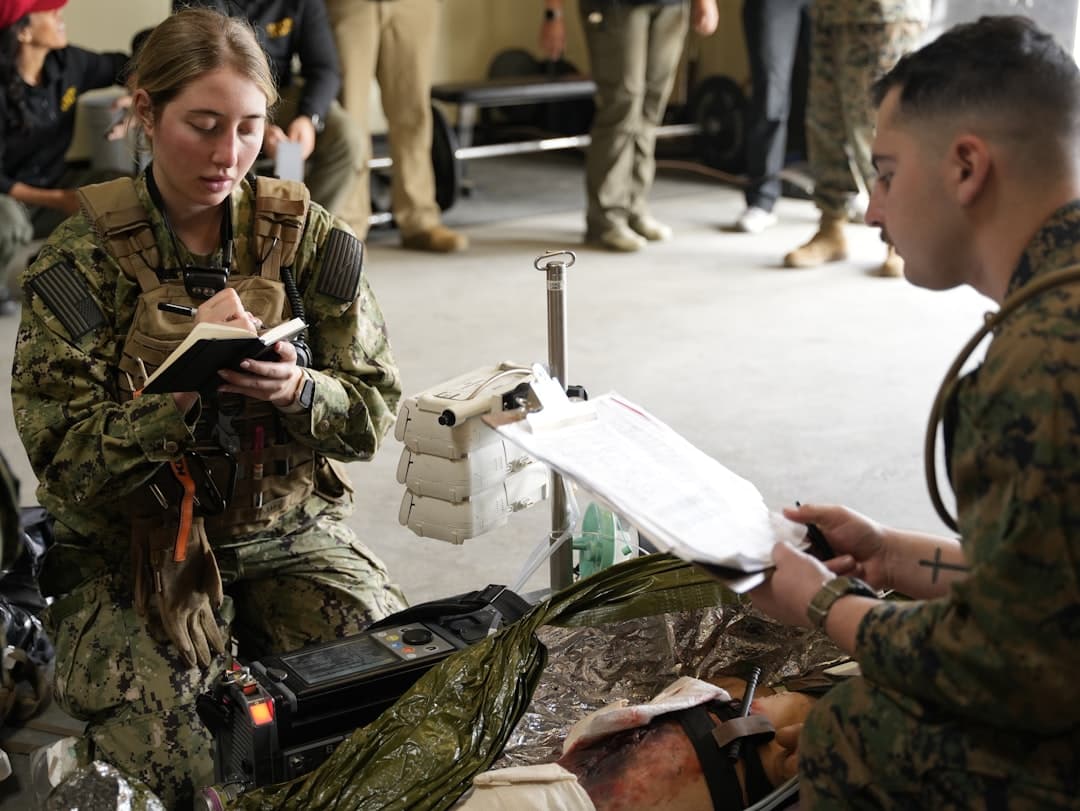
Certifications Needed for Military Athletic Training Positions
Landing an athletic training role in the military healthcare system takes more than clinical skill. It requires a carefully assembled portfolio of military athletic training certifications, licenses, and credentials — each serving a distinct purpose in the Department of Defense hiring and onboarding process. This guide breaks down every requirement so you can build a complete, military-ready credentials file before you apply.
Overview: Why Military Athletic Training Requires Specialized Credentials
Military athletic training positions require, at minimum, a BOC Athletic Trainer Certified (ATC) credential, a CAATE-accredited master's degree, state licensure in the installation's state, AHA BLS Provider certification, and successful completion of a federal background investigation. Additional preferred certifications include TSAC-F, CSCS, and DHA privileging for clinical roles.
How Military Athletic Trainer Roles Differ from Civilian Sports Medicine Positions
Working with tactical athletes means operating in an environment where clinical standards intersect with federal compliance, force readiness mandates, and operational security protocols. Unlike a university or professional sports setting, your credentialing is verified not only by your employer but also by Defense Health Agency (DHA) compliance offices, installation medical directors, and sometimes contracting officers from entirely separate agencies.
The physical demands your patients face — rucking under load, combat drills, airborne operations — also shape the clinical competencies you need. Employers look for providers who understand tactical population musculoskeletal injury patterns, return-to-duty decision-making frameworks, and the chain-of-command dynamics that influence patient care in military settings.
Types of Military Athletic Training Positions (DoD Civilian, Contractor, Uniformed)
Not all military athletic training jobs share the same credentialing pathway. Understanding the three primary employment categories is essential:
- DoD Civilian (GS Positions): Federal employees hired under OPM classification codes GS-0601 or GS-0631. These positions require full federal background investigations, adherence to OPM qualification standards, and often DHA credentialing.
- Government Contractor Positions: Athletic trainers employed by private companies that hold DoD contracts. The contracting company manages HR and payroll, but credentialing requirements are dictated by the contract's Statement of Work (SOW) and the installation's medical authority. This is the most common employment pathway for military athletic trainers today.
- Uniformed Service Roles: Commissioned officers serving as athletic trainers within a branch of the armed forces. These roles require meeting military accession standards in addition to all clinical certifications.
Each pathway layers different administrative requirements on top of the same core clinical certifications.
The Growing Demand Through the Army H2F Program and Beyond
The U.S. Army's Holistic Health and Fitness (H2F) system has created over 300 athletic training positions across brigade combat teams as of 2024, making it the single largest employer of athletic trainers in the military ecosystem. The program embeds multidisciplinary human performance teams — including athletic trainers, strength and conditioning coaches, dietitians, physical therapists, and cognitive performance specialists — directly into operational units.
H2F's rapid expansion has created sustained demand for credentialed athletic trainers. That demand, however, comes with rigorous credentialing standards that can delay or disqualify underprepared applicants.
PSI connects certified athletic trainers with military healthcare positions across all branches and installation types. With deep knowledge of DoD credentialing requirements, PSI's recruitment team helps candidates prepare their credentials files before submission — reducing delays and improving placement outcomes. Learn more on the PSI company overview page.
Core Certification: BOC Athletic Trainer Credential (ATC)
The Board of Certification (BOC) ATC credential is the mandatory baseline for every athletic training position in the military — no exceptions across civilian, contractor, or uniformed roles.
What the BOC ATC Certification Covers
The ATC credential verifies that a practitioner has met the educational and examination standards required for entry-level athletic training practice. It covers five domains: injury and illness prevention and wellness promotion, examination assessment and diagnosis, immediate and emergency care, therapeutic intervention, and healthcare administration and professional responsibility.
For military roles, the BOC credential is typically the first item verified during application review. Without it, your application will not advance regardless of other qualifications.
Eligibility Requirements and the CAATE Master's Degree Mandate
As of 2023, entry-level athletic training education requires a CAATE-accredited professional master's degree, replacing the previous bachelor's-level pathway. To sit for the BOC exam, you must:
- Graduate from a CAATE-accredited professional athletic training program at the master's level
- Complete all clinical education requirements within the program
- Have your program director verify degree completion to the BOC
If you earned your ATC before the 2022 transition through an accredited bachelor's program, your certification remains valid. However, new candidates entering the pipeline must hold the master's degree.
BOC Exam Structure, Pass Rates, and Preparation Tips
The BOC exam is a computer-based assessment with approximately 175 scored questions, including multiple-choice and alternative item formats (drag-and-drop, multi-select, focused testlets). The exam is administered at Pearson VUE testing centers nationwide.
Recent first-attempt pass rates hover around 80-84% for graduates of CAATE-accredited programs. Candidates preparing specifically for military roles should pay particular attention to emergency care scenarios and musculoskeletal assessment domains, as these competencies are heavily emphasized in military contract performance standards.
Begin your BOC exam preparation during your final clinical rotation. Many successful candidates use a combination of the BOC Practice Exam, Rausch & Crawford study guides, and peer study groups. If you are targeting a military position, supplement your preparation with tactical population case studies and environmental emergency scenarios (heat, cold, altitude).
Maintaining Your ATC: CEU Requirements and Reporting Cycles
BOC certificants must complete 50 continuing education units (CEUs) every two-year reporting period. This requirement runs on a fixed cycle regardless of your employment status — meaning your CEU clock does not pause during a contract transition, deployment, or onboarding delay.
For military contract athletic trainers, aligning CEU completion with contract renewal timelines is critical. Many contracts run in one-year or two-year option periods, and a lapsed ATC due to incomplete CEUs can result in immediate removal from a position. Build a CEU completion plan that front-loads units early in each reporting cycle rather than scrambling near the deadline.
State Licensure Requirements for Military Base Assignments
Understanding State-by-State Licensure Variations
Athletic trainers must hold a valid state license, certification, or registration in 49 of 50 states (California being the exception as of 2024). The specific credential type — licensure, certification, or registration — varies by state, as do scope-of-practice provisions, supervision requirements, and renewal timelines.
For military athletic trainers, this creates a practical challenge: installations are located across dozens of states, each with different regulatory frameworks. A position at Fort Bragg (North Carolina) carries different state requirements than one at Joint Base Lewis-McChord (Washington).
Federal Supremacy and Licensure Portability on Military Installations
Certain DoD civilian positions may fall under federal supremacy provisions, which can allow practitioners to operate under their existing state license rather than obtaining licensure in the installation's state. However, this applies inconsistently. Many contract positions explicitly require licensure in the state where the installation is geographically located, regardless of federal supremacy arguments.
The safest approach: assume you will need state licensure in your assigned installation's state unless the contracting officer or your recruiter confirms otherwise in writing.
OCONUS Assignments: Licensure Considerations for Overseas Positions
For positions outside the continental United States — Germany, Japan, South Korea, Guam, and other locations — state licensure requirements are defined by the contract SOW and the DHA credentialing authority overseeing the installation. Most OCONUS contracts require you to hold an active, unrestricted state license in any U.S. state. The specific state matters less than having an active, valid license in good standing.
How to Manage Multi-State Licensure for Contract Flexibility
If you intend to pursue multiple military assignments over the course of your career, or if you want maximum flexibility for short-notice opportunities, consider maintaining licensure in two or three states with large concentrations of military installations. Texas, North Carolina, Washington, Virginia, and Georgia collectively cover a significant share of domestic military athletic training positions.
Keep a spreadsheet tracking renewal dates, CEU requirements specific to each state, and any state-specific scope-of-practice provisions. The administrative burden is manageable with planning but can quickly become disqualifying if a license lapses unnoticed.
Ready to Take the Next Step?
Join our team and make a meaningful impact on military readiness while advancing your athletic training career.
Explore H2F positions at Fort Bragg➜Defense Health Agency (DHA) Credentialing and Privileging
What Is DHA Credentialing and Who Needs It?
Athletic trainers working in or through military treatment facilities (MTFs) — hospitals, clinics, and troop medical clinics on military installations — must complete DHA credentialing and privileging. This is a verification and authorization process separate from your BOC certification and state licensure. It confirms that you are qualified to practice within the specific military healthcare facility.
DHA credentialing applies to both DoD civilian employees and contractors who provide clinical care in MTF settings. Athletic trainers embedded with operational units through programs like H2F may face different credentialing requirements depending on whether their clinical supervision runs through an MTF.
Documents and Verifications Required for DHA Privileging
The DHA privileging process requires verified submission of:
- BOC ATC certification (primary source verified)
- State licensure (primary source verified)
- Professional master's degree transcripts from a CAATE-accredited program
- AHA BLS Provider certification
- National Practitioner Data Bank (NPDB) query results
- Malpractice claims history
- Professional references (typically three clinical references)
- Completed application forms (often through the Centralized Credentials Quality Assurance System, or CCQAS)
Every document must be current and verifiable at the time of submission. Expired credentials, even by a single day, will halt the process.
Timeline Expectations: How Long Credentialing Takes
DHA credentialing typically takes 60 to 120 days from complete application submission to granting of privileges. Incomplete applications — the most common cause of delays — can extend this timeline significantly.
This is one of the most frequently underestimated aspects of military athletic training employment. You may receive a job offer and then wait three to four months before you can begin seeing patients. Planning your finances and logistics around this timeline is essential.
Begin assembling your DHA credentialing documents the moment you decide to pursue military athletic training positions — not after you receive an offer. Having a complete credentials file ready to submit on day one can shave weeks off your onboarding timeline. PSI's credentialing specialists can help you identify gaps before submission. Visit the application page to get started.
Installation-Specific Credentialing Nuances
While DHA oversees the military health system broadly, individual installations retain some credentialing autonomy. Army installations may require additional documentation through the Regional Health Command structure, and specific facilities may impose additional clinical competency verification requirements.
Your contracting company or federal hiring office will provide installation-specific guidance, but understanding that these variations exist helps you anticipate and prepare for additional requests during the credentialing process.
Required Life-Support and Emergency Certifications
AHA BLS Provider Certification (and Why Red Cross May Not Qualify)
American Heart Association (AHA) BLS Provider certification is the standard required by most DoD contracts and MTFs. This is a critical distinction: American Red Cross CPR/BLS certifications are often not accepted by military credentialing offices.
The AHA BLS Provider course specifically covers high-performance team CPR, bag-mask ventilation, and AED use for healthcare providers. Ensure your BLS card reads "BLS Provider" — not "Heartsaver" or "CPR/AED" — and that it is issued by the American Heart Association or an AHA-authorized training center.
ACLS, PALS, and Other Advanced Certifications: When They Apply
Advanced Cardiovascular Life Support (ACLS) and Pediatric Advanced Life Support (PALS) are not standard requirements for most military athletic training positions. However, certain roles in MTF emergency departments, special operations support, or forward-deployed clinical teams may list ACLS as preferred or required.
If a specific contract SOW includes ACLS as a requirement, the contracting company will typically note this in the job posting. It is not worth pursuing speculatively unless you are targeting a specific niche role.
Keeping Emergency Certifications Current on Long-Term Contracts
AHA BLS Provider certification is valid for two years. On multi-year military contracts, you will need to renew at least once during your assignment. Many installations offer on-base AHA renewal courses through their MTFs or training departments. Verify availability early in your assignment rather than waiting until your card is about to expire — course availability can be limited, and an expired BLS card can suspend your clinical privileges.
Preferred and Competitive-Edge Certifications for Military AT Roles
Beyond the required certifications, several additional credentials significantly strengthen your candidacy for military athletic training positions — and in some cases are becoming de facto requirements in contract solicitations.
TSAC-F: Tactical Strength and Conditioning Facilitator
The NSCA's Tactical Strength and Conditioning Facilitator (TSAC-F) credential is increasingly listed as preferred or required in military human performance team requests for proposals (RFPs). The TSAC-F demonstrates competency in designing and implementing strength and conditioning programs specifically for tactical populations — military, law enforcement, and fire/rescue personnel.
For athletic trainers seeking H2F positions or similar embedded roles, the TSAC-F signals to hiring managers that you understand the physical demands profile of military service and can contribute to performance optimization beyond injury rehabilitation.
CSCS: Certified Strength and Conditioning Specialist
The NSCA's Certified Strength and Conditioning Specialist (CSCS) credential remains one of the most widely recognized performance certifications in military settings. While athletic trainers and strength coaches serve distinct roles on military human performance teams, holding both the ATC and CSCS demonstrates versatility that is valued in smaller team configurations or remote installations where staff members wear multiple hats.
FMS, CES, PES, and Other Movement/Performance Credentials
The Functional Movement Screen (FMS) certification, NASM Corrective Exercise Specialist (CES), and NASM Performance Enhancement Specialist (PES) are supplementary credentials that can differentiate your application. None are typically required, but they demonstrate investment in movement assessment and performance training methodologies commonly used in military human performance programs.
Dry Needling Certification and Scope-of-Practice Considerations
Dry needling is an increasingly valued skill in military athletic training, particularly in MTF-based roles where athletic trainers work alongside physical therapists and physicians. However, dry needling scope of practice varies significantly by state, and not all military installations authorize athletic trainers to perform the technique even if the state allows it.
Before investing in dry needling certification, verify that: (1) the state where your target installation is located permits athletic trainers to perform dry needling, and (2) the installation's credentialing authority grants privileges for the procedure to athletic trainers specifically.
Concussion Management and Emerging Specialty Certifications
Concussion assessment and management is a core competency for military athletic trainers, given the prevalence of blast exposure and traumatic brain injury in military populations. While no single concussion certification is universally required, completing the DoD's Progressive Return to Activity (PRA) protocol training and maintaining familiarity with the Military Acute Concussion Evaluation (MACE) tool will prepare you for clinical expectations in most military settings.
Ready to Take the Next Step?
Join our team and make a meaningful impact on military readiness while advancing your athletic training career.
Explore H2F positions at Joint Base Lewis-McChord➜Security Clearance and Background Investigation Requirements
Tier 1 vs. Tier 3 Investigations: What to Expect
Most military contractor athletic training positions require at minimum a Tier 1 background investigation (formerly known as NACI — National Agency Check with Inquiries). Tier 1 is the baseline investigation for non-sensitive positions and involves verification of your identity, criminal history, credit history, and employment and education records.
Some OCONUS positions or roles at sensitive installations may require a Tier 3 investigation (Secret clearance). Tier 3 investigations are more extensive, including interviews with references and neighbors, and can take several months to complete.
Neither investigation type requires you to have a prior clearance — the investigation is initiated by your employer or the government after you accept a position. However, your personal history must be compatible with clearance standards.
Common Disqualifiers and How to Prepare
Common issues that can complicate or disqualify a background investigation include:
- Financial problems: Significant delinquent debt, bankruptcies, or unexplained financial patterns
- Criminal history: Felony convictions are generally disqualifying; misdemeanors are evaluated case by case
- Drug use: Recent illegal drug use (within the past 12 months for most substances) is typically disqualifying
- Foreign contacts: Extensive foreign contacts or foreign financial interests may require additional adjudication
- Dishonesty: Providing false or misleading information on security forms (SF-86 or equivalent) is the single most common disqualifier
The best preparation is transparency. Disclose everything honestly on the security questionnaire. Investigators expect imperfect histories — they are evaluating your reliability and trustworthiness, not demanding a flawless record.
OCONUS and Sensitive Duty Station Clearance Requirements
OCONUS positions frequently require a valid U.S. passport, a completed medical screening, and a Status of Forces Agreement (SOFA) stamp for the host nation. Some locations (particularly in the Middle East and certain Pacific installations) may require additional country-specific clearances or force protection briefings.
Begin your passport application or renewal immediately if you are considering OCONUS positions. Passport processing times fluctuate, and an expired passport can delay your deployment date by weeks.
Education Requirements: Degrees and Accreditation Standards
The 2022 CAATE Professional Master's Degree Transition
The Commission on Accreditation of Athletic Training Education (CAATE) transitioned entry-level athletic training education to the professional master's degree level, with the last bachelor's-level programs admitting students in 2018. This means that any candidate entering the military athletic training pipeline today must hold a master's degree from a CAATE-accredited program.
If you hold a bachelor's-level ATC earned before the transition, your certification and education remain valid for military positions. You are not required to obtain a master's degree retroactively. However, you may find that some contract SOWs now list a master's degree as a minimum requirement regardless of when you earned your ATC. Review each posting carefully.
Does a Doctorate (DAT) Give You an Advantage in Military Hiring?
The Doctor of Athletic Training (DAT) is an emerging terminal degree in the profession. While a DAT may provide advantages in academic or leadership-track positions, most military contract athletic training roles do not currently differentiate between master's and doctoral-level candidates in hiring or compensation.
If your career goals include clinical leadership, program development, or eventual transition to military healthcare administration, a DAT may be a strategic investment. For direct patient care contract positions, a master's degree meets the standard.
Approved Degree Programs and How Recruiters Verify Education
Military employers and contracting companies verify your degree through primary source verification — contacting your institution directly or through a credentialing verification organization (CVO). Ensure that your transcripts are current, available for release, and reflect your conferred degree.
If your institution has changed names, merged with another school, or closed, maintain documentation of the CAATE accreditation status that was active during your enrollment. Credentialing offices need to confirm that your program was accredited at the time you completed it, not its current status.
How to Organize and Present Your Credentials for Military Applications
Building a Military-Ready Credentials File
A complete credentials file for military athletic training positions should include:
- BOC ATC certification — current, with verification code
- State licensure — active and unrestricted in the target installation's state
- CAATE-accredited master's degree — official transcripts sealed or electronically verifiable
- AHA BLS Provider card — current, with expiration date clearly visible
- Government-issued identification — valid driver's license and U.S. passport
- Professional references — three clinical supervisors with current contact information
- Additional certifications — TSAC-F, CSCS, FMS, or others, with verification documentation
- Malpractice insurance documentation — current policy or certificate of coverage
- Updated resume/CV — formatted for federal or contractor application systems
Compile digital copies (PDF format, clearly labeled) and maintain hard copies in a portable credentials folder. The ability to submit a complete file within 24 hours of a request can be the difference between being placed and being passed over.
Common Application Mistakes That Delay or Disqualify Candidates
The most frequent credentialing errors PSI's recruitment team encounters include:
- Submitting an expired BLS card (even if renewal is scheduled for the following week)
- Holding state licensure in a state other than the installation's location
- Failing to disclose a malpractice claim or license investigation on the application
- Providing references who are unreachable or unaware they have been listed
- Uploading illegible scans of certification cards
Each of these errors typically adds two to six weeks to the credentialing process. Most are entirely preventable with advance preparation.
Working with a Military Healthcare Recruiter to Streamline the Process
PSI specializes in placing athletic trainers and other healthcare professionals in military positions across CONUS and OCONUS installations. PSI's credentialing team reviews your file before submission, identifies gaps, and guides you through DHA privileging, state licensure transfers, and security clearance initiation. This pre-screening process reduces onboarding delays and gives you a clearer picture of your timeline to start date. Start your application with PSI today.
A recruiter experienced in military healthcare contracting understands the nuances that generic job boards and self-applications often miss. The right recruiter will tell you which certifications a specific contract actually requires versus what is listed as preferred, which state licensure you need and how quickly you can obtain it, and whether the installation's credentialing timeline aligns with your availability.
Complete Checklist: Military Athletic Training Certifications at a Glance
Required for all military athletic training positions:
- BOC Athletic Trainer Certified (ATC)
- CAATE-accredited professional master's degree (or bachelor's if certified before transition)
- State licensure in the installation's state (or any active U.S. state license for OCONUS)
- AHA BLS Provider certification
- Successful Tier 1 (or higher) federal background investigation
Required for MTF-based clinical roles:
- DHA credentialing and privileging
Preferred/competitive-edge certifications:
- TSAC-F (Tactical Strength and Conditioning Facilitator)
- CSCS (Certified Strength and Conditioning Specialist)
- FMS (Functional Movement Screen)
- NASM CES or PES
- Dry needling certification (where scope of practice permits)
Additional requirements for specific roles:
- Tier 3 (Secret) security clearance for sensitive or OCONUS positions
- Valid U.S. passport for OCONUS assignments
- ACLS for select MTF emergency or special operations support roles
Frequently Asked Questions
Ready to Take the Next Step?
Join our team and make a meaningful impact on military readiness while advancing your athletic training career.
Explore H2F positions at Multiple Installations➜This guide is maintained by the PSI editorial team and updated as DoD credentialing requirements change. For the most current information on specific contract requirements, consult directly with a PSI recruiter or the contracting officer for your target position. Last reviewed March 2026.
Explore More
- Athletic Trainer Jobs in Military Healthcare: Complete 2026 Guide
- H2F vs SMIP: Choosing the Right Military AT Program
- The Complete Guide to the Army H2F Program for Athletic Trainers
Ready to take the next step? View open positions and apply today.
Ready to Serve? Start Your Military Healthcare Career
Join our team and make a difference serving in Army H2F and Marine Corps SMIP programs across the United States.
Apply Now➜

